
Why Timing Matters in Neurodegeneration
Neurodegenerative diseases such as Alzheimer’s, frontotemporal dementia, and Parkinson’s disease are characterized by gradual and often irreversible loss of brain tissue. By the time symptoms become clinically apparent, substantial damage has already occurred. This delay in recognition limits therapeutic options and can reduce the effectiveness of available interventions.
Early detection of neurodegenerative disease allows clinicians to:
- Identify subtle brain atrophy patterns before clinical symptoms manifest.
- Provide patients and families with earlier counseling and support.
- Initiate lifestyle and therapeutic strategies that may slow disease progression.
The Role of MRI Volumetrics in Early Detection
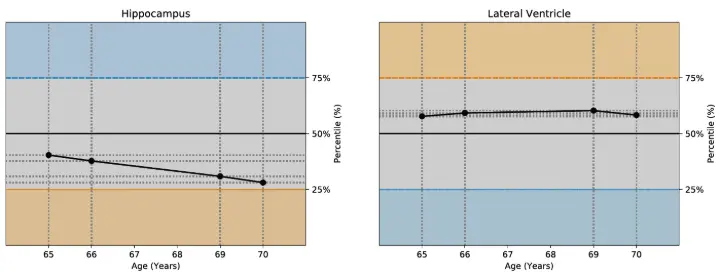
Traditional MRI provides critical anatomical views but is often limited by subjective interpretation. Subtle changes, such as hippocampal shrinkage or ventricular enlargement, may be overlooked until they become pronounced.
AI-enabled MRI volumetrics, such as Neuroreader®, add quantitative analysis to routine imaging by turning brain structures into precise, measurable data. This more objective approach helps clinicians:
- Detect brain volume loss years before symptoms appear.
- Compare patient data against age-, gender-, and head size-adjusted normative databases.
- Track longitudinal changes over time for a clearer picture of disease progression.
Clinical Impact on Patient Outcomes
The integration of volumetric MRI into clinical practice supports better outcomes by:
- Earlier Intervention: Initiating therapies or clinical trial enrollment before significant cognitive decline.
- Personalized Care Plans: Tailoring interventions to a patient’s unique brain volumetric profile.
- Reduced Misdiagnosis: Differentiating between neurodegenerative conditions and psychiatric or metabolic disorders with overlapping symptoms.
- Improved Patient Communication: Objective measurements and visual overlays make it easier to explain findings and care strategies to patients and families.
Moving from Reactive to Proactive Care
The transition from subjective interpretation to quantitative, reproducible MRI analysis represents a paradigm shift. Instead of waiting for symptoms to dictate next steps, clinicians can proactively manage patients based on measurable evidence of early structural changes.
This not only improves patient outcomes but also supports healthcare systems in reducing costs associated with delayed diagnosis, prolonged hospitalizations, and advanced-stage care.
Next Step
Want to see how volumetric MRI can transform your diagnostic workflow?
Request a sample report to learn how Neuroreader® supports early detection neurodegenerative disease assessment and enhances patient outcomes.