Understand Your Brain MRI
with Neuroreader®
Neuroreader® is an advanced medical software that works
alongside a standard brain MRI to provide deeper, more
precise insights into brain health.
What Conditions Can It Help With? How Can I Request Neuroreader®?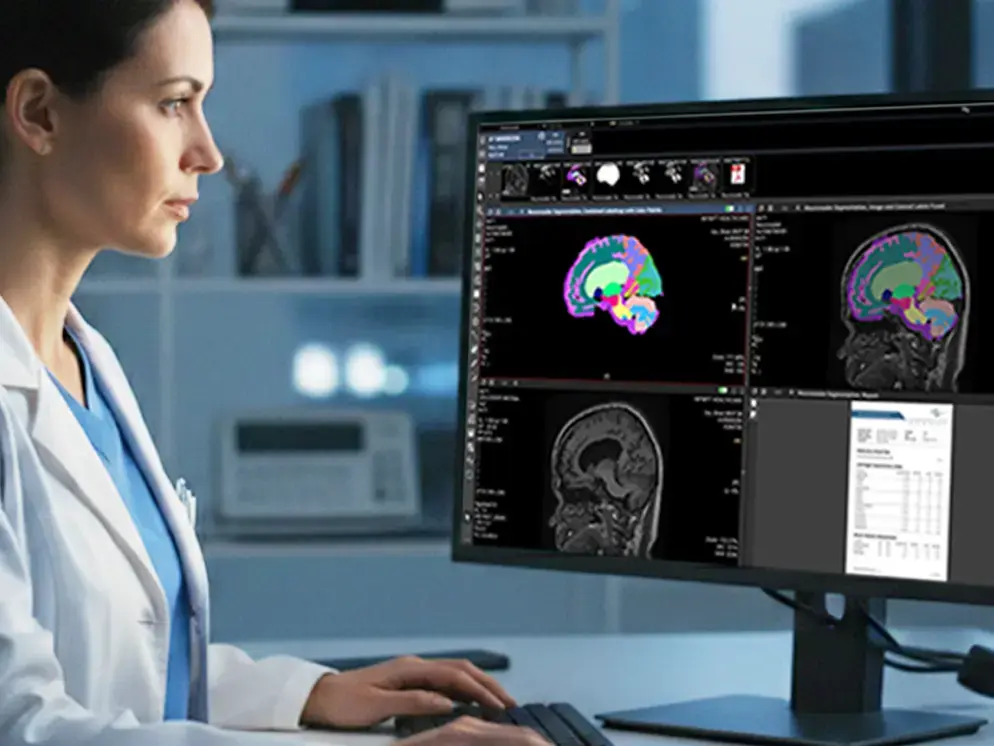
What is Neuroreader®?
Neuroreader® is an advanced medical software that works alongside a standard brain MRI to provide deeper, more precise insights into brain health.
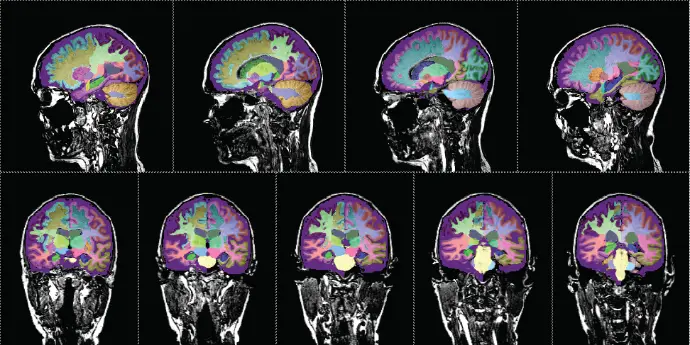
Instead of relying only on visual interpretation, Neuroreader® uses advanced algorithms to measure and analyze brain structures, helping physicians identify subtle changes that may be difficult to assess through visual interpretation alone.
- Analyzes MRI brain scans
- Measures brain volume and structure
- Compares results to a healthy reference database
- Generates a detailed report in less than 10 minutes.
Why Does This Matter for Patients?

Quantitative Measurements
Traditional MRI interpretation can vary between clinicians. Neuroreader® provides quantitative, reproducible measurements to support clinical interpretation, reducing uncertainty.

Earlier Detection
Neuroreader® can help physicians identify changes in the brain years before symptoms become noticeable.

Better Monitoring Over Time
If you’ve already been diagnosed with a neurological condition, Neuroreader® can help your care team track changes and progression more clearly.

Supports Better Care Decisions
By providing quantitative data, Neuroreader® helps physicians make more informed treatment and care plans, which can improve quality of life and long-term outcomes.
What Conditions Can It Help With?
Memory Loss & Brain Health
If you or a loved one are experiencing memory problems or changes in thinking, getting clear answers early is important.
Neuroreader® helps doctors better understand what’s happening in the brain by:
- Measuring key areas like the hippocampus (important for memory)
- Looking at overall brain volume and signs of shrinkage
- Comparing your brain to what’s typical for someone your age and background
This added insight can help your doctor identify early signs of conditions like Alzheimer’s or other forms of dementia, even before symptoms become more severe.
Head Injuries (TBI)
After a concussion or traumatic brain injury, symptoms don’t always match what can be seen on a standard MRI.
Neuroreader® provides a deeper level of analysis by:
- Measuring brain structures in detail
- Comparing the left and right sides of the brain
- Highlighting subtle changes that may otherwise go unnoticed
This can help your care team better understand the impact of an injury and guide next steps in care.
Tracking Changes Over Time
For ongoing conditions, it’s important to know whether things are staying the same, improving, or changing.
With Neuroreader®, doctors can:
- Track how brain measurements change over time
- See small shifts that may not be visible on standard scans
- Monitor how conditions are progressing or responding to treatment
This helps provide a clearer picture of your brain health over time, supporting more informed care decisions.
How Does the Process Work?
Neuroreader® is designed to fit seamlessly into a standard brain MRI, meaning it integrates into standard MRI workflows without additional procedures for the patient.
Your doctor orders a brain MRI
(with a special 3D sequence for volumetric analysis)
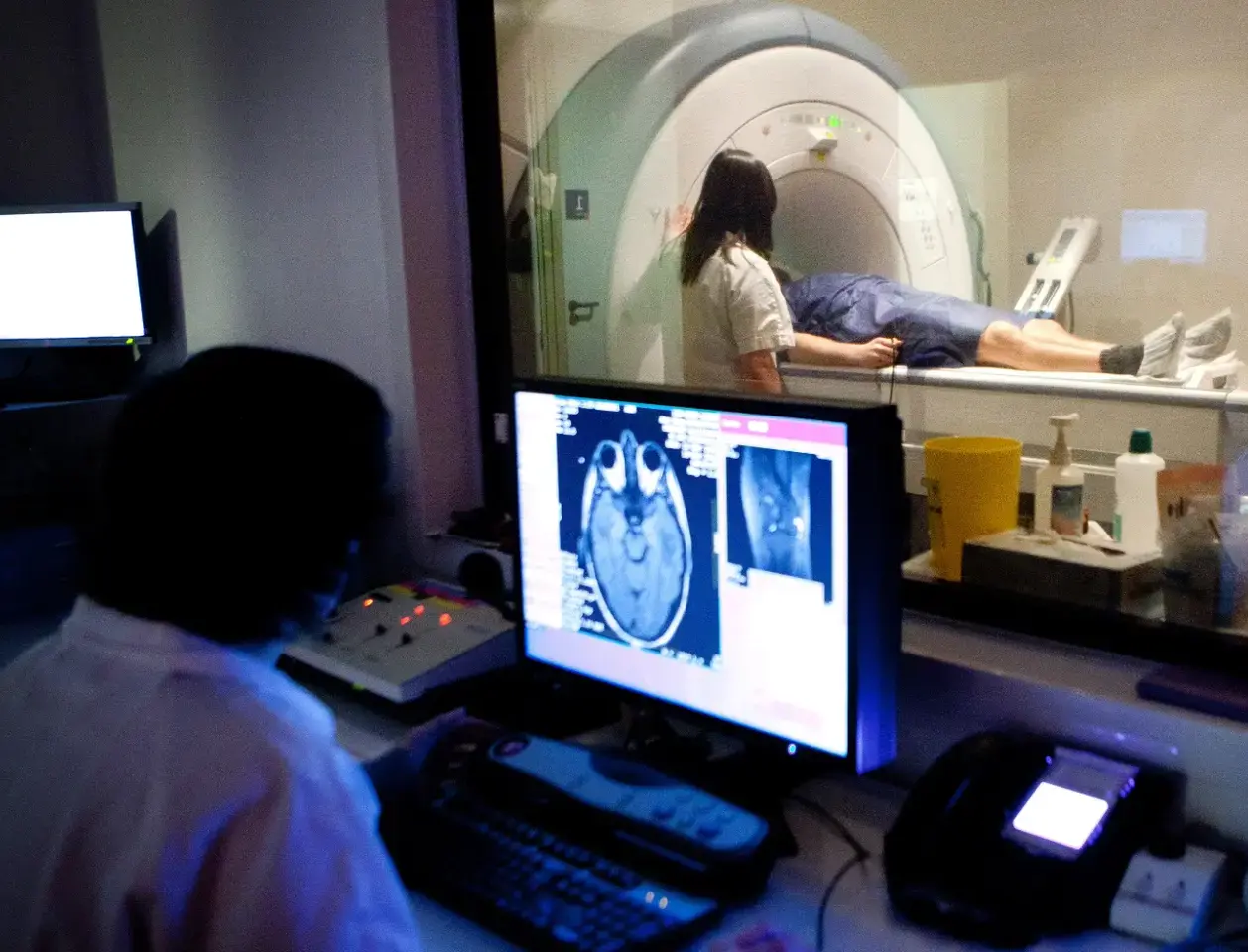
You complete your MRI scan
The scan is safe, non-invasive, and does not require radiation
Neuroreader® analyzes your scan
The software measures and evaluates brain structures
Your physician receives the report
Including visual maps, measurements, and comparisons
You discuss results with your doctor
Your care team explains what the findings mean for you
What Makes Neuroreader® Different?
- Provides quantitative data, not just images
- Reduces subjectivity in MRI interpretation
- Fast results, typically available within minutes
- Uses validated comparisons based on age, sex, and head size
- Works with routine MRI scans, no additional procedures required
How Can I Request Neuroreader®?
Neuroreader® is not something you schedule directly, it is requested by your physician.
1. Talk to Your Doctor
Ask your neurologist, primary care physician, or specialist:
"Can my MRI include a Neuroreader® volumetric analysis?"
2. Ask About a 3D Brain MRI
Your doctor may need to specify a 3D MRI sequence (such as MPRAGE or BRAVO) to enable Neuroreader® analysis.
3. Choose the Right Imaging Center
Some hospitals and imaging centers already offer Neuroreader®. If unsure, ask your provider or imaging facility.
Download a Patient-Friendly Overview
Frequently Asked Questions
Yes. Neuroreader® does not change your MRI experience.
- No additional scanning time required (beyond standard MRI protocols)
- No injections or contrast required for analysis
- No radiation exposure
It simply analyzes the MRI images after your scan is completed.
Neuroreader® works with a standard brain MRI, but your doctor may request a specific 3D imaging sequence to ensure the best results.
No.
Your MRI will feel the same as any routine brain scan:
- No additional procedures
- No radiation
- No extra discomfort
Neuroreader® analyzes the images after your scan is complete.
Neuroreader® can generate a report in less than 10 minutes after your MRI is completed.
Your doctor will review the results and share them with you.
Neuroreader® is often used to support evaluation and monitoring of:
- Memory loss and dementia (including Alzheimer’s disease)
- Cognitive decline
- Traumatic brain injury (TBI)
-
Other neurological conditions
It can help doctors identify subtle changes in brain structure earlier than visual review alone, which may support earlier evaluation and care planning.
No.
Neuroreader® is a clinical support tool that provides additional data. Your doctor uses this information along with other tests and evaluations to make a diagnosis.
You can ask your doctor: “Can my MRI include Neuroreader® analysis?” .
Your physician will determine if it’s appropriate and include it when ordering your scan.
Availability may vary by hospital or imaging center. If your provider doesn’t offer it, you can ask about locations that do.
Coverage can vary depending on your provider and location. It’s best to:
- Ask your doctor or imaging center
- Contact your insurance provider directly
A standard MRI shows images of the brain.
Neuroreader® adds measurable data and comparisons, giving doctors a clearer, more objective understanding of what those images mean.