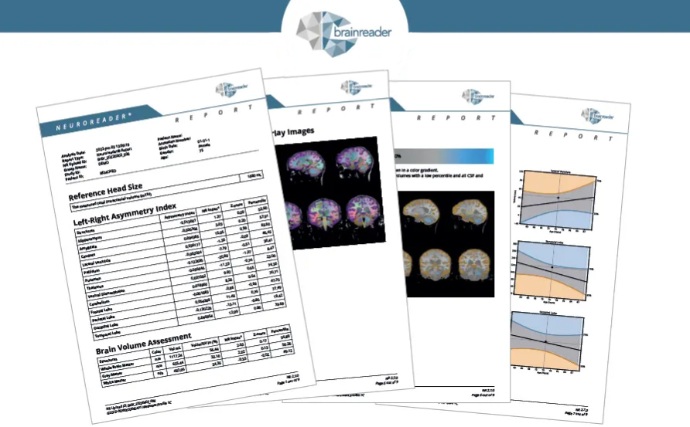
What Is Quantitative MRI (qMRI) and Why Does It Matter? Magnetic resonance imaging (MRI) has long been a cornerstone of brain imaging, but conventional scans are largely interpreted visually. While valuable, this approach can sometimes miss subtle structur...
AI-Enabled MRI Volumetry Accurately Differentiates Between Neurocognitive Disorders Los Angeles, California — September 11, 2024 A peer-reviewed study published in BMC Neurology demonstrates the power of AI-enabled MRI volumetry in distinguishing between common neurocognitive disorde...
PNI Study Links Muscular Strength and Mobility to Brain Health in Alzheimer’s Disease A new clinical study from the Pacific Neuroscience Institute (PNI) has identified a significant relationship between muscular strength, mobility, and brain volume in individuals with Alzheimer’s disea...
Precision Medicine Approach to Alzheimer’s Disease Shows Cognitive and MRI Improvements in Pilot Study Burlingame, Calif. | July 6, 2022 News provided by Apollo Health Over 80% of Patients Show Cognitive Improvement Using a Precision Medicine Protocol Amid repeated failures of traditional drug trials f...
Research Shows Physical Activity Improves Brain Health by Reducing BMI and Improving Insulin Metabolism Neurology study links exercise, metabolic health, and preserved brain volume A research study published on April 13, 2022, in Neurology —the medical journal of the American Academy of Neurology —repor...
How to Accurately Differentiate bvFTD from EOAD Using MRI Volumetric Quantification Published research highlights the role of automated brain MRI analysis in reducing dementia misdiagnosis Differentiating behavioral variant frontotemporal dementia (bvFTD) from early-onset Alzheimer’s...
Quantitative Structural MRI for Neurocognitive Disorders Cyrus A. Raji, MD, PhD Department of Neurology Washington University, St. Louis Somayeh Meysami, MD Department of Neurology David Geffen School of Medicine at UCLA Los Angeles, CA Mario F. Mendez, MD,...
Improved Detection of Subtle Mesial Temporal Sclerosis: Validation of a Commercially Available Software for Automated Segmentation of Hippocampal Volume Why Accurate Detection of Mesial Temporal Sclerosis Matters Mesial temporal sclerosis (MTS) is one of the most common and surgically treatable causes of temporal lobe epilepsy (TLE) . Accurate identif...
Progressive Focal Gray Matter Volume Loss in a Former High School Football Player Authors: Cyrus A. Raji, MD, PhD; David A. Merrill, MD, PhD; Jorge R. Barrio, PhD; Bennet Omalu, MD, MPH; Gary W. Small, MD Journal: American Journal of Geriatric Psychiatry (October 2016) DOI: 10.1016...
Quantitative Neuroimaging Software for Clinical Assessment of Hippocampal Volumes on MR Imaging Hippocampal atrophy is a key imaging marker in Alzheimer’s disease (AD) and can also appear in conditions such as mesial temporal sclerosis, traumatic brain injury, depression, PTSD, and schizophrenia...
Brain Structure in Bilingual vs. Monolingual Individuals with Alzheimer’s Disease A peer-reviewed study published in the Journal of Alzheimer’s Disease examined whether bilingualism is associated with differences in brain structure among individuals with probable Alzheimer’s diseas...
MRI Volumetric Quantification in Persons with a History of Traumatic Brain Injury (TBI) and Cognitive Impairment A 2019 study in the Journal of Alzheimer’s Disease found that people with a history of traumatic brain injury (TBI) who present with cognitive complaints show measurable, region-specific brain atrophy...