
The Pressure on Imaging Centers Is Increasing
Imaging centers today operate in a challenging environment.
They are expected to:
- Deliver high-quality imaging insights to support clinical interpretation
- Maintain fast turnaround times
- Optimize resource utilization
- Remain financially sustainable
At the same time, demand for neuroimaging is growing, particularly in areas like cognitive decline, neurodegenerative disease, and traumatic brain injury.
This creates a critical question for imaging providers:
How can we deliver more value without increasing operational burden?
Volumetric MRI offers a compelling answer.
The Shift Toward
Value-Based Imaging
Healthcare is moving toward a value-based model, where success is defined not just by volume, but by:
- Diagnostic accuracy
- Clinical impact
- Efficiency and cost-effectiveness
- More quantitative information per scan
Imaging centers that can provide More quantitative information per scan are better positioned to succeed in this environment.
The Problem with Traditional
Volumetric Analysis
Historically, volumetric MRI has been:
- Time-intensive
- Resource-heavy
- Limited to research or specialized cases
Manual segmentation requires: 30 minutes to 2 hours per scan
For most imaging centers, this is simply not practical.
The Opportunity: Automated Volumetric MRI

Automation changes the equation.
With solutions like Neuroreader®, volumetric analysis becomes:
- Fast
- Scalable
- Designed for use in clinical workflows
Reports are generated in:
Less than 10 minutes per scan
This enables imaging centers to offer advanced analysis without increasing workload.
Financial Benefits of Volumetric MRI
Automated volumetric MRI helps imaging centers improve efficiency, reduce labor burden, and expand service offerings without major workflow disruption.
1. Increased Throughput Without Additional Staffing
Because volumetric analysis is automated:
- No manual segmentation is required
- Radiologists do not spend extra time performing measurements
- Workflow remains efficient
Result
- More cases can be processed
- Staff productivity increases
- Operational efficiency improves
2. Lower Labor Costs Compared to Manual Methods
Manual volumetric analysis:
- Requires specialized expertise
- Consumes significant time
Automated analysis:
- Eliminates manual effort
- Reduces dependency on specialized labor
Financial Impact
- Lower cost per case
- Improved margin on advanced imaging services
3. Scalable, Pay-Per-Use Model
Volumetric MRI solutions like Neuroreader® are often structured in a way that:
- Aligns cost with usage
- Eliminates large upfront investment
- Scales with demand
Why This Matters
- Reduces financial risk
- Allows gradual adoption
- Supports growth without overcommitment
4. Reduced Need for Additional Modalities
In some cases, volumetric MRI can provide valuable insights that Provides additional quantitative information that may complement existing imaging approaches.
For example:
- MRI is significantly less costly than PET imaging
- More widely available
- Easier to integrate into routine workflows
Result
- More cost-effective diagnostic pathways
- Improved accessibility for patients
Revenue Growth Opportunities
1. Differentiation in a Competitive Market
Imaging centers compete not only on price, but on capability.
Offering volumetric MRI allows facilities to:
- Stand out from competitors
- Provide advanced neuroimaging services
- Position themselves as leaders in neurological diagnostics.
2. Increased Referrals
Referring physicians are increasingly looking for:
- More detailed reports
- Objective data
- Better tools for patient management
Providing volumetric analysis can:
- Attract new referral sources
- Strengthen relationships with neurologists and specialists.
3. Expanded Service Offerings
Volumetric MRI enables imaging centers to:
- Offer specialized neuroimaging services
- Support dementia and cognitive care programs
- Participate in research or clinical collaborations.
Clinical Value Drives Financial Value
Diagnostic Confidence
When clinicians have access to quantitative data:
- They can make more confident decisions
- Reports become more actionable
Better Patient Outcomes
Support for longitudinal assessment of brain volume changes can lead to:
- May support clinical workflows and decision-making processes
- Better long-term outcomes
Why This Matters Financially
Facilities that deliver better clinical value:
- Build stronger reputations
- Retain referring physicians
- Increase long-term patient volume
Operational Advantages
Minimal Workflow Disruption
Neuroreader® is designed to:
- Integrate with existing PACS systems
- Use standard MRI protocols
- Deliver results quickly
No Additional Scan Time
- Uses routine 3D T1 sequences
- No contrast required
- No significant extension of exam time
Fast Turnaround
With results available in under 10 minutes:
- Reports can be reviewed quickly
- Turnaround times remain competitive
Easy Implementation
Flexible deployment options include:
- Web-based access
- PACS integration
- Mediation server for automation
This allows facilities to choose what works best for their environment.
Addressing Common Business Concerns
No. Automation ensures that volumetric analysis fits into existing workflows without adding burden.
With:
- Increased efficiency
- Potential revenue growth
- Improved differentiation
The return on investment can be significant.
Yes. Quantitative data provides clear value to:
- Neurologists
- Radiologists
- Referring physicians
The Strategic Advantage
Aligning With Industry Trends
Healthcare is moving toward:
- Data-driven decision-making
- Objective measurement
- Precision medicine
Volumetric MRI aligns directly with these trends.
Preparing for the Future
As neurodegenerative diseases become more prevalent:
- Demand for advanced imaging will increase
- Expectations for diagnostic accuracy will rise
Facilities that adopt volumetric MRI now are better positioned for the future.
Real-World Impact: Before vs After

Before
- Standard MRI interpretation only
- Limited quantitative insight
- Less differentiation
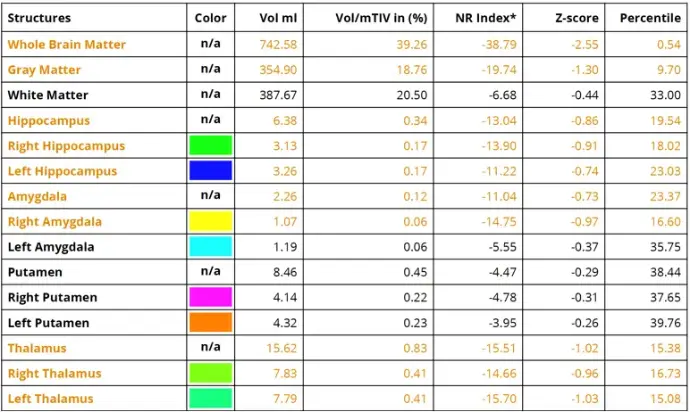
After
- Objective volumetric data included
- Enhanced clinical value
- Stronger competitive positioning
Conclusion: A High-Value, Low-Disruption Opportunity
Volumetric MRI represents a rare opportunity in healthcare:
- High clinical value
- Strong financial upside
- Minimal operational disruption
With automated solutions like Neuroreader®, imaging centers can:
- Improve efficiency
- Expand services
- Increase revenue potential
All while enhancing the quality of patient care.
Contact us to see how volumetric MRI can impact your imaging center’s performance